Growing
Calendula: Wound Healer and Kitchen Spice
Complete calendula cultivation guide covering pot marigold botany, easy cool-season growing, triterpene and flavonoid chemistry.
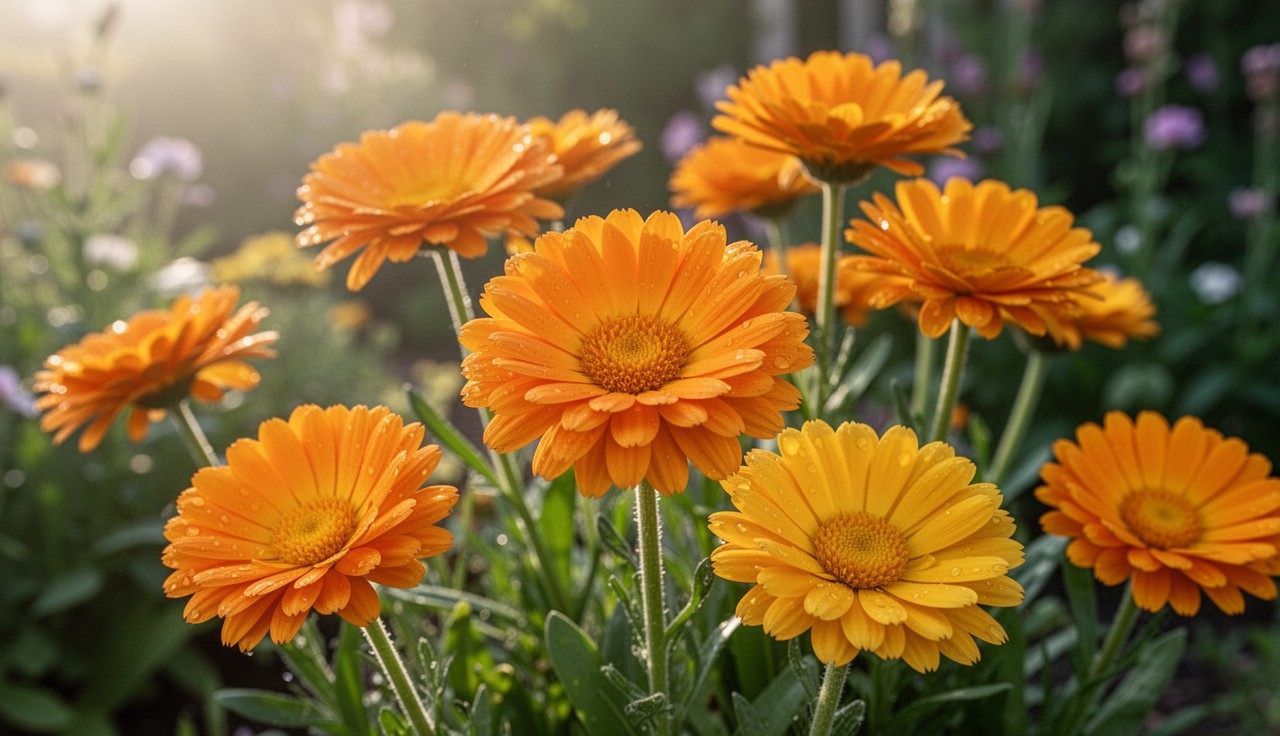
Photograph: Aiwok, CC BY-SA 3.0. Source: Wikimedia Commons
On this page
Botanical Description
Calendula (Calendula officinalis), commonly called pot marigold, is a cheerful, fast-growing annual or short-lived perennial in the Asteraceae family, native to southern Europe. Plants grow 12–24 inches tall with slightly sticky, aromatic, lance-shaped leaves and striking 2–3 inch flower heads in shades of golden yellow to deep orange. The flowers open with the sun and close at dusk or during overcast weather, the name “calendula” derives from the Latin calendae (first day of the month), referring to its nearly year-round blooming habit in mild climates.
Calendula should not be confused with garden marigolds (Tagetes species), which are an entirely different genus with different chemistry. True calendula petals are edible and medicinal; Tagetes marigolds are not interchangeable.
Cool-Season Champion
In Texas, calendula reverses the normal growing calendar. It thrives in the cool months (October, May) when most garden annuals struggle, then fades in summer heat. Fall-planted calendula provides flowers through winter mild spells and peaks in spring, filling the gap when little else blooms. This counter-seasonal behavior makes it invaluable for year-round garden productivity.
Complete chamomile cultivation guide covering German chamomile botany, self-seeding strategies, apigenin and bisabolol chemistry.
For a More In-Depth Read, Click HereGrowing Requirements
| Parameter | Range / Tolerance |
|---|---|
| USDA Hardiness Zones | 2–11 (annual; survives light frost to ~-4 °C (25 °F)) |
| Light | Full sun to partial shade |
| Soil | Average, well-drained; tolerates poor soils; pH 6.0–7.0 |
| Moisture | Moderate; tolerates drought once established |
| Spacing | 8–12 inches; direct sow or transplant |
| Germination | 7–14 days; large, easy-to-handle curved seeds |
Harvesting and Processing
Harvest flower heads when fully open, in the morning after dew dries. Regular deadheading (picking flowers every 2–3 days) dramatically extends the blooming season and increases total yield. A single calendula plant can produce 50–100+ flowers over its lifespan with diligent harvesting.
Dry whole flower heads on screens in a well-ventilated area. The resinous center takes longer to dry than the petals; ensure complete dryness before storage to prevent mold. Properly dried calendula retains its vivid color and maintains potency for 1–2 years.
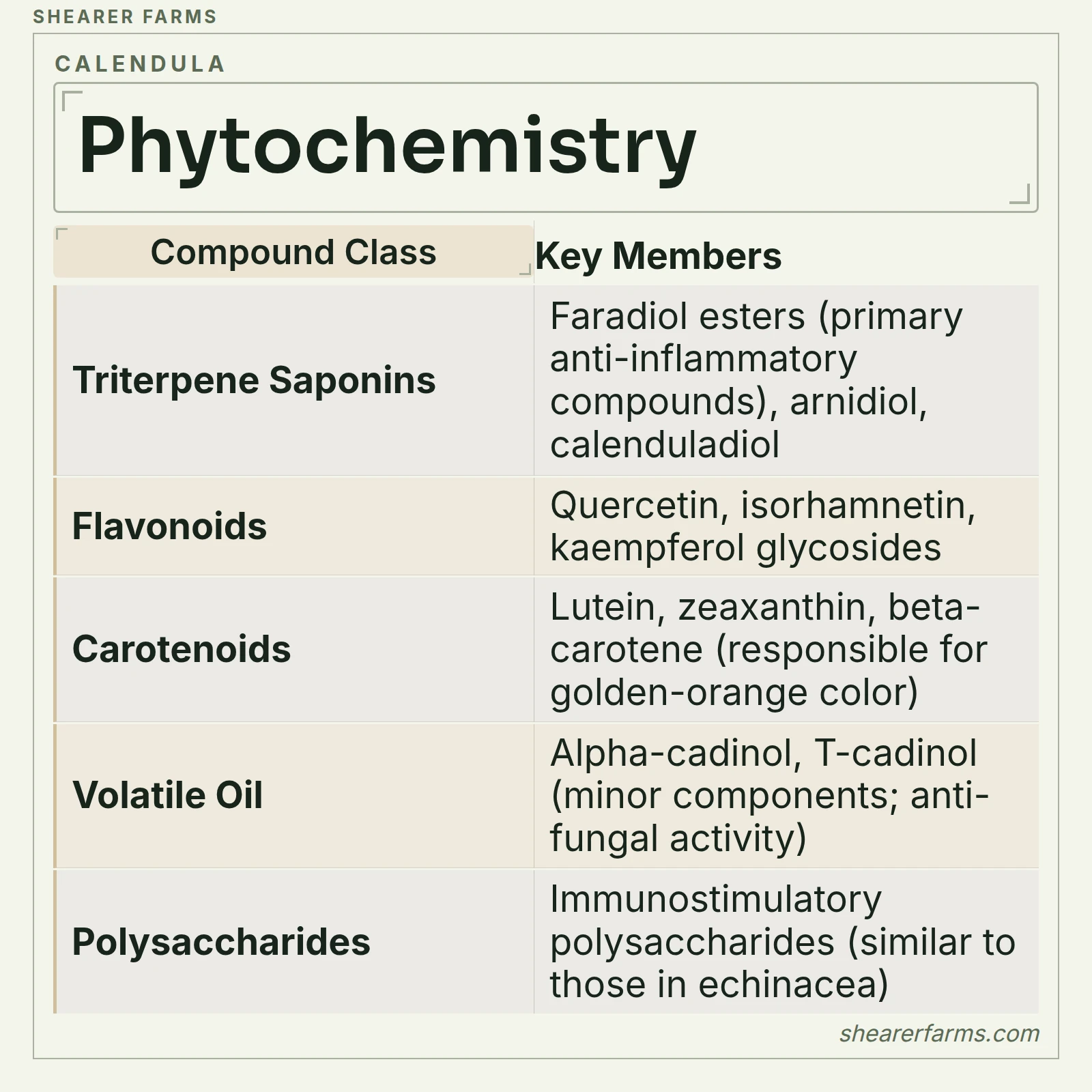
Phytochemistry
| Compound Class | Key Members |
|---|---|
| Triterpene Saponins | Faradiol esters (primary anti-inflammatory compounds), arnidiol, calenduladiol |
| Flavonoids | Quercetin, isorhamnetin, kaempferol glycosides |
| Carotenoids | Lutein, zeaxanthin, beta-carotene (responsible for golden-orange color) |
| Volatile Oil | Alpha-cadinol, T-cadinol (minor components; anti-fungal activity) |
| Polysaccharides | Immunostimulatory polysaccharides (similar to those in echinacea) |
Culinary Uses
- Poor man’s saffron: Dried petals steeped in warm water or milk release a golden color that can substitute for saffron in rice dishes, soups, and baked goods. The flavor is mildly peppery and slightly bitter, distinct from saffron but pleasant.
- Salad garnish: Fresh petals add vivid color to green salads, grain bowls, and cheese plates.
- Butter and cheese coloring: Historically used to color butter, cheese, and custards in European farmstead dairy traditions.
- Tea: Mild, slightly sweet floral tea, often blended with chamomile or mint.
Traditional and Evidence-Based Uses
- Wound healing: The most established use. Calendula preparations promote epithelial cell migration, increase collagen production, and accelerate wound closure in multiple research models.
- Radiation dermatitis: Clinical trials support calendula cream for preventing and treating radiation-induced skin damage during cancer treatment, a use now recommended in some oncology guidelines.
- Diaper rash: Clinical evidence for topical calendula equaling or exceeding aloe vera for infant diaper dermatitis.
- Anti-inflammatory: Faradiol esters demonstrate anti-inflammatory activity comparable to indomethacin in preclinical models.
Complete echinacea cultivation guide covering purple coneflower botany, prairie restoration planting, alkamide and polysaccharide chemistry.
For a More In-Depth Read, Click HerePrecautions
- Asteraceae allergy: Cross-reactivity possible with ragweed and chrysanthemum allergies.
- Pregnancy: Traditionally avoided during pregnancy as a precaution due to theoretical uterine-stimulant effects, though evidence is limited.
- Topical sensitivity: Rare contact dermatitis; patch test before widespread use on sensitive skin.
Planning a Bed: Spacing Arithmetic
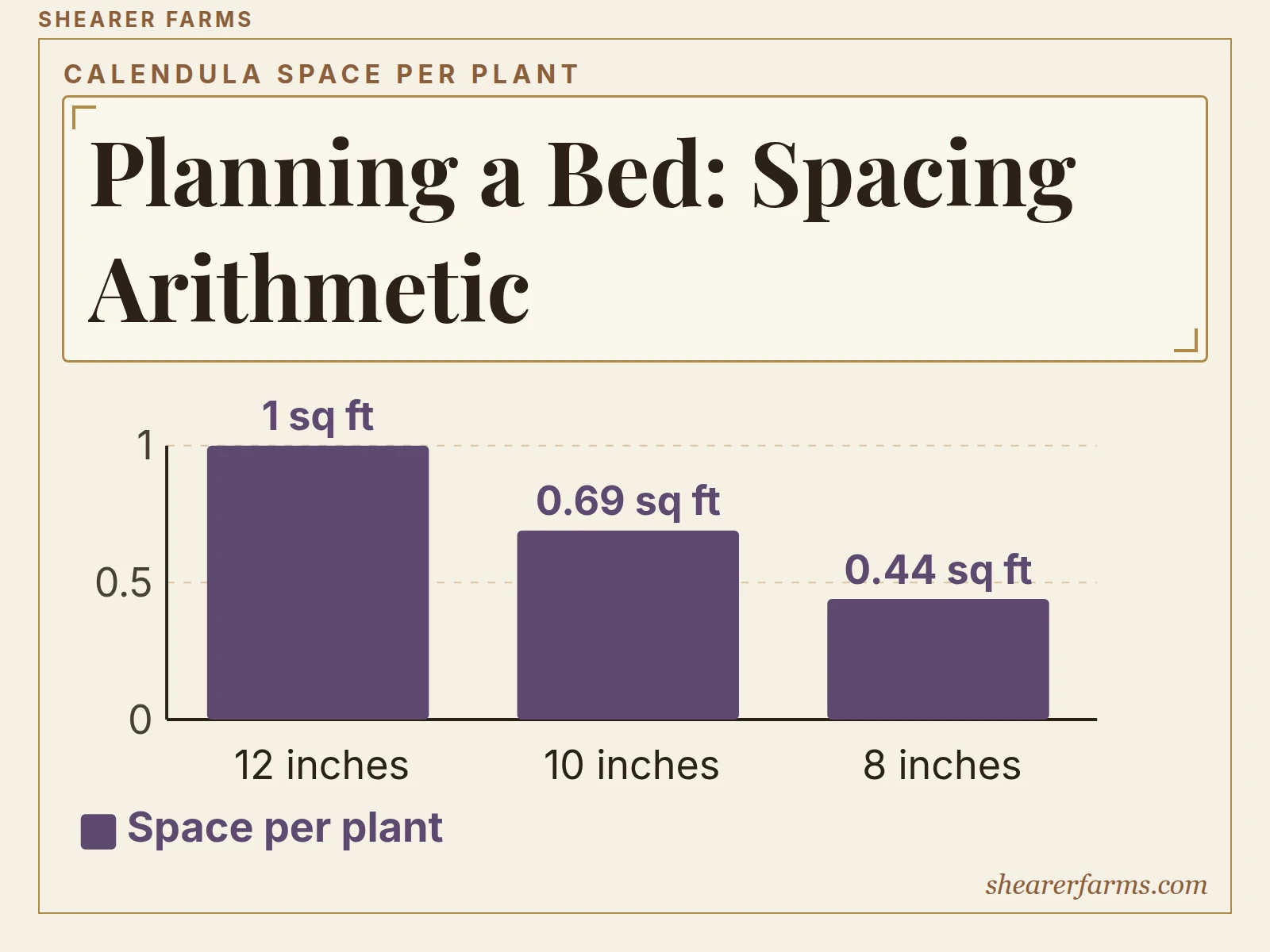
The growing table gives a spacing of 8 to 12 inches, and the harvesting section says a single plant can produce 50 to 100 or more flowers over its lifespan with diligent picking. Together those two figures let you size a bed before you sow a seed. Each plant occupies a square of its spacing on a side, so plants per square foot is 144 divided by the spacing in inches, squared. A standard 4 by 8 foot bed is 32 square feet.
| Spacing | Space per plant | Plants in a 4 x 8 ft bed | Flowers at 50 per plant | Flowers at 100 per plant |
|---|---|---|---|---|
| 12 inches | 1.00 sq ft | 32 | 1,600 | 3,200 |
| 10 inches | 0.69 sq ft | 46 | 2,300 | 4,600 |
| 8 inches | 0.44 sq ft | 72 | 3,600 | 7,200 |
These are ceilings, not promises. The 50 to 100 figure assumes diligent harvesting, and tighter spacing means each plant has less room and light. Use the table to decide how many seeds or transplants to buy, then adjust after the first season when you know what your own bed actually produced.
Picking Schedule
Because picking every 2 to 3 days extends the blooming season, the number of pickings in a month is simple division: 30 days divided by 2 days is 15 pickings, and divided by 3 days is 10. Ten to fifteen short visits a month is the real time cost of the 50 to 100 flowers per plant.
| Picking interval | Pickings in 30 days | Flowers needed per picking to reach 50 per plant in one month |
|---|---|---|
| Every 2 days | 15 | about 3.3 per plant |
| Every 3 days | 10 | 5 per plant |
Valerian (Valeriana Officinalis): A Full Guide to Cultivation, Sleep Science, and Herbal Tradition
Complete guide to valerian cultivation covering Valeriana officinalis botany, cool-climate growing, root harvest timing.
For a More In-Depth Read, Click HereA Texas Calendar
This guide notes that in Texas calendula reverses the usual calendar: it grows in the cool months and fades in summer heat, so fall-planted plants flower through mild winter spells and peak in spring. The table lays that out as a working plan. It adds no new dates beyond that pattern; adjust the months to your own frost dates.
| Season | What the plant is doing | What you do |
|---|---|---|
| Fall | Germinates in 7 to 14 days and establishes in cooling weather | Direct sow or transplant at 8 to 12 inch spacing |
| Winter | Flowers through mild spells; survives light frost to about 25°F | Pick on mild days; keep deadheading |
| Spring | Peak bloom, when little else is flowering | Pick every 2 to 3 days and dry the surplus |
| Summer | Fades in heat | Finish drying and storing; plan the next fall planting |
Calendula or Marigold?
The botanical description warns that calendula must not be confused with garden marigolds of the genus Tagetes. They have different chemistry and are not interchangeable. Check these points before you harvest anything for the kitchen or for a salve.
| Point | Calendula (Calendula officinalis) | Garden marigold (Tagetes) |
|---|---|---|
| Common name | Pot marigold | Marigold |
| Genus | Calendula | Tagetes |
| Petals edible and medicinal | Yes | Not interchangeable with calendula |
| Flower head size | 2 to 3 inches, golden yellow to deep orange | Do not rely on size; confirm the genus on the seed packet |
| Leaves | Slightly sticky, aromatic, lance-shaped | Confirm the genus on the seed packet |
The surest check is the seed packet or plant tag: it should say Calendula officinalis. If a packet says only “marigold,” do not assume.
Drying and Storage Log
The guide says the resinous center takes longer to dry than the petals, that the heads must be completely dry before storage to prevent mold, and that properly dried calendula keeps its color and potency for 1 to 2 years. A written log turns those three statements into something you can check.
| Batch | Date picked | Date fully dry | Center checked dry? (yes or no) | Date jarred | Use by (jar date plus 1 to 2 years) |
|---|---|---|---|---|---|
| 1 | |||||
| 2 | |||||
| 3 |
Rule of thumb for the log: if the center of any head is still soft or tacky, the batch is not dry, whatever the petals look like. Leave it on the screen another day and check again.
Before You Use It: Checklist
| Question | Why it matters, from the Precautions section |
|---|---|
| Does anyone using it have a ragweed or chrysanthemum allergy? | Calendula is in the Asteraceae family; cross-reactivity is possible |
| Is anyone using it pregnant? | Traditionally avoided in pregnancy as a precaution; evidence is limited |
| Is it going on skin for the first time? | Rare contact dermatitis; patch test before widespread use on sensitive skin |
| Is the plant truly Calendula officinalis? | Tagetes marigolds are not interchangeable |
Quick Reference Summary
| Topic | What this guide says |
|---|---|
| Plant | Calendula officinalis, pot marigold, Asteraceae, 12 to 24 inches tall |
| Soil and light | Full sun to partial shade; average, well-drained soil, pH 6.0 to 7.0 |
| Spacing and germination | 8 to 12 inches; 7 to 14 days |
| Harvest | Fully open heads, morning after the dew dries, every 2 to 3 days |
| Storage | Dry completely; keeps 1 to 2 years |
| Main compound classes | Triterpene saponins, flavonoids, carotenoids, volatile oil, polysaccharides |
| Texas pattern | Cool-season crop: plant in fall, peak in spring, fades in summer heat |
References
- Pommier et al., Journal of Clinical Oncology (2004), radiation dermatitis RCT
- Preethi et al., Journal of Clinical Biochemistry and Nutrition, wound healing mechanisms
- European Medicines Agency, Herbal Monograph on Calendula officinalis
- Arora et al., Pharmacognosy Reviews, phytochemistry and pharmacology review
- German Commission E Monograph, Calendula flowers
Common questions
How do I grow calendula?
USDA Hardiness Zones: 2–11 (annual; survives light frost to ~-4 °C (25 °F)). Light: Full sun to partial shade; soil: Average, well-drained; tolerates poor soils; pH 6.0–7.0. Moisture: Moderate; tolerates drought once established; spacing: 8–12 inches; direct sow or transplant.
What can I make from calendula?
Harvest flower heads when fully open, in the morning after dew dries. Regular deadheading (picking flowers every 2–3 days) dramatically extends the blooming season and increases total yield. A single calendula plant can produce 50–100+ flowers over its lifespan with diligent harvesting. soil pH 4 9 6 to 7 hardiness 1 13 2 to 11 spacing 0 120 in 8 to 12 Dry whole flower heads on screens in a well-ventilated area. The resinous center takes longer to dry than the petals; ensure complete dryness before storage to prevent mold.
What has calendula traditionally been used for?
Wound healing: The most established use. Calendula preparations promote epithelial cell migration, increase collagen production, and accelerate wound closure in multiple research models. Radiation dermatitis: Clinical trials support calendula cream for preventing and treating radiation-induced skin damage during cancer treatment, a use now recommended in some oncology guidelines. Diaper rash: Clinical evidence for topical calendula equaling or exceeding aloe vera for infant diaper dermatitis. Anti-inflammatory: Faradiol esters demonstrate anti-inflammatory activity comparable to indomethacin in preclinical models.
Calendula or Marigold?
The botanical description warns that calendula must not be confused with garden marigolds of the genus Tagetes . They have different chemistry and are not interchangeable. Check these points before you harvest anything for the kitchen or for a salve. The surest check is the seed packet or plant tag: it should say Calendula officinalis . If a packet says only “marigold,” do not assume.
How do I store calendula?
The guide says the resinous center takes longer to dry than the petals, that the heads must be completely dry before storage to prevent mold, and that properly dried calendula keeps its color and potency for 1 to 2 years. A written log turns those three statements into something you can check. Rule of thumb for the log: if the center of any head is still soft or tacky, the batch is not dry, whatever the petals look like. Leave it on the screen another day and check again.
Browse by topic
More guides to explore
 GrowingChamomile Cultivation Guide
 GrowingEchinacea Cultivation Guide
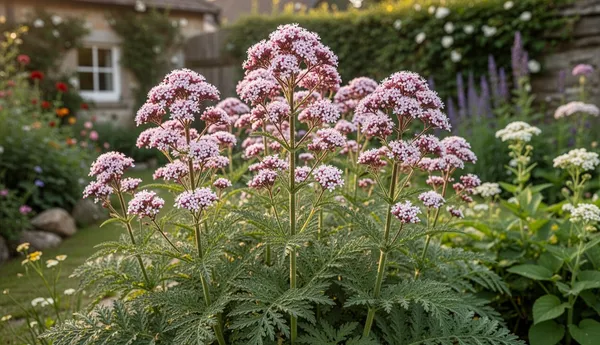 GrowingValerian (Valeriana officinalis): A Full Guide to Cultivation, Sleep Science, and Herbal Tradition
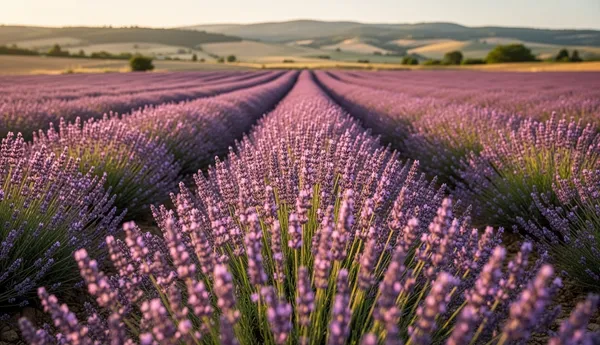 GrowingLavender Cultivation Guide
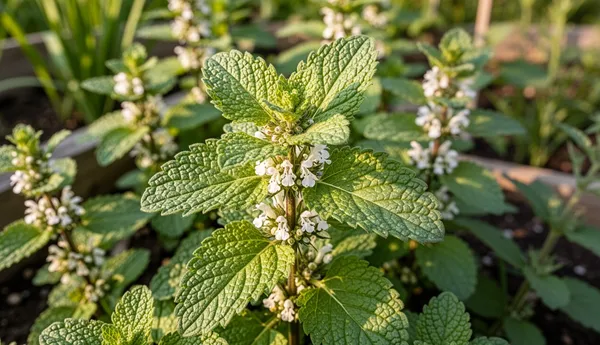 GrowingLemon Balm (Melissa officinalis): The Beginner’s Herb That Ancient Greeks Called the “Elixir of Life”
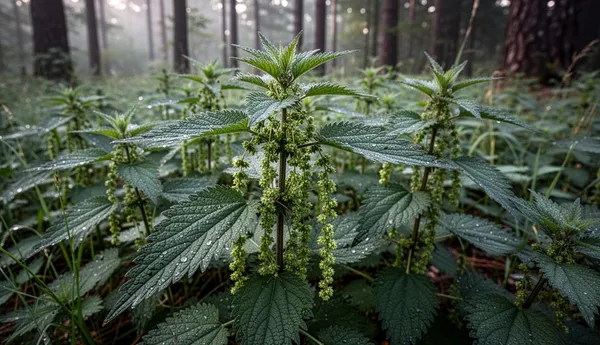 GrowingNettle Cultivation Guide
 PlantsPassionflower
 GrowingAloe Vera Cultivation Guide
 GrowingAgarita Cultivation Guide
 GrowingAshwagandha Cultivation Guide
 GrowingBacopa Monnieri Cultivation Guide
 GrowingBlue Java Banana Cultivation Guide